
Protect Your Research From Becoming the Next Horror Story
I Lost My Lab Notebook: 7 Researchers Share Their Horror Stories (And How to Prevent Yours)
“I know I wrote it down. I just can’t remember where.”
Those eight words have haunted more research careers than failed experiments, contaminated cultures, or rejected manuscripts combined.
Every researcher has a lab notebook horror story. Maybe it’s yours. Maybe it’s the cautionary tale your PI told during orientation that made you double-check your notebook location for the next month. Maybe it’s happening to you right now, and that’s why you’re reading this article at 2 AM in a mild panic.
The truth is, paper lab notebooks are accidents waiting to happen. Coffee spills. Building floods. Backpacks stolen from cars. That one time you left it on the bus. That other time you lent it to a labmate who moved to Switzerland.
These stories aren’t here to scare you. They’re here to show you that if it happened to them, it can happen to you—and to show you exactly how to prevent it.
Story #1: The Flooded Basement
Sarah, PhD Candidate, Molecular Biology, University of Wisconsin
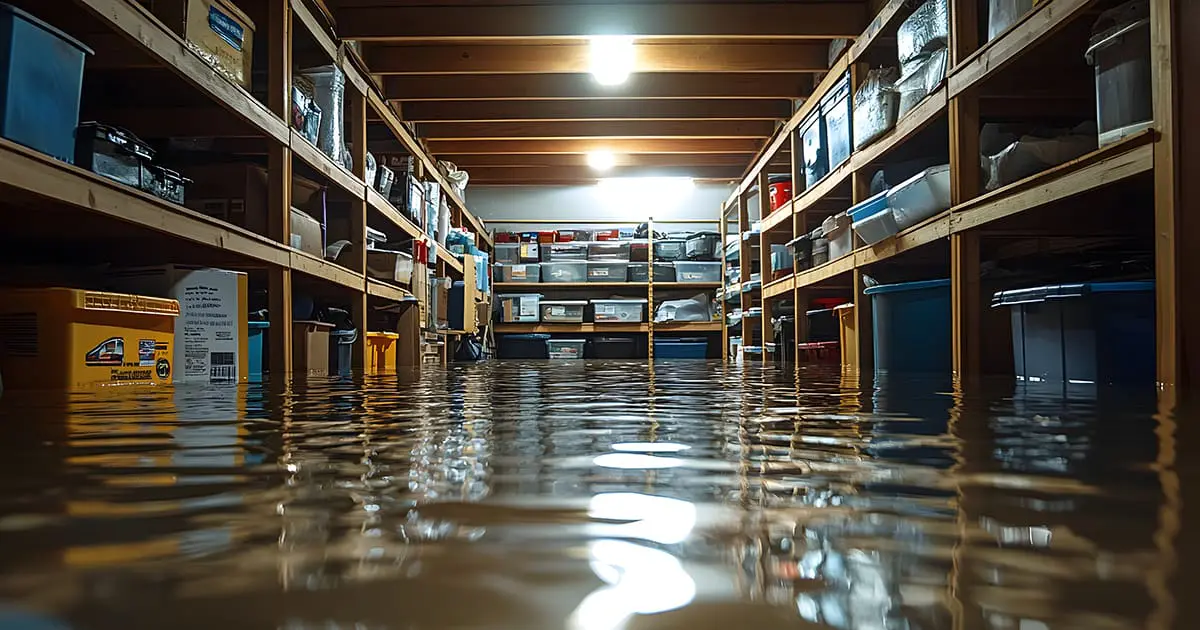
“Our lab was in a basement. Old building, concrete floors, the usual. I kept all my notebooks—four years’ worth—in a filing cabinet by my bench. One weekend, a pipe burst two floors up. By Monday morning, there was three inches of water covering the entire lab floor.”
“The filing cabinet wasn’t waterproof. Obviously. When I opened it, my notebooks were soaking. The ink had bled on about 40% of the pages. Some were completely illegible. Two years of optimization work for my main project—just… gone. I had photos of some gels and some data in Excel, but I couldn’t remember the exact conditions. Which lot of antibody. What concentration actually worked.”
“I spent six months re-optimizing experiments I’d already perfected. My defense got pushed back a year. A year. Because of a pipe.”
What would have prevented this: Cloud-based digital backup. Water can’t reach the cloud. Even if Sarah’s laptop had been in that basement, her data would have been safe on ELabELN’s secure servers.
Story #2: The Stolen Backpack
Marcus, Postdoc, Chemistry, Stanford
“I was driving to a conference to present my work. Stopped for coffee at a rest area off I-5. Left my backpack in the car—visible on the back seat like an idiot—while I ran inside for five minutes. Came back, window smashed, backpack gone.”
“My laptop was in there. My iPad. And my current lab notebook with the last eight months of experiments. The thieves probably threw the notebook in a dumpster within an hour. Everything else was replaceable. The notebook wasn’t.”
“I had to email the conference and withdraw my talk. I couldn’t answer basic questions about my methods without that notebook. My PI was… not pleased. The police never recovered anything.”
What would have prevented this: Digital notebooks that sync to the cloud automatically. Marcus would have lost the physical devices but kept all his data. He could have presented from a borrowed laptop.
Story #3: “I Can’t Read My Own Handwriting”
Jennifer, Research Scientist, Biotech, Boston
“This one’s embarrassing, but it’s real. I have terrible handwriting. Always have. In grad school, it didn’t matter as much because I was constantly referring back to recent experiments. But I’m now working in industry, and we had an FDA audit.”
“The auditor asked to see my notebook from a critical validation study I’d done 18 months earlier. I pulled it out. We both stared at it. I literally could not decipher my own notes. Was that a ‘6’ or a ‘0’? Is that word ‘incubate’ or ‘inoculate’? Did I use 10 mM or 10 μM?”
“The auditor marked it as a major finding—illegible records. We had to repeat the entire validation study. Three months of work, $50,000 in materials, all because I can’t write legibly under time pressure.”
What would have prevented this: Typed entries. You can’t misread typed text. Digital lab notebooks eliminate handwriting interpretation entirely.
Story #4: The Departing Postdoc
David, Assistant Professor, Neuroscience, UC San Diego
“When I was a postdoc, we had another postdoc—let’s call him Alex—who did brilliant work on a really promising therapeutic target. Spent three years optimizing everything, got beautiful data, then landed a faculty position across the country. Packed up, moved, took his notebooks with him.”
“Six months later, our PI wanted to follow up on Alex’s work for a grant application. Asked Alex to send copies of his protocols and data. Alex said sure… and then never did. Emails went unanswered. He was busy with his new lab, new responsibilities. Eventually stopped responding entirely.”
“Three years of work, essentially lost. We knew the general approach, but none of the critical details. Which vendor for the reagent. What temperature actually worked. The negative results that would have saved us time.”
“We had to start from scratch. It was like he’d never done the work at all.”
What would have prevented this: Shared digital lab notebook where the institution retains access. When researchers leave, their documented work stays accessible to the lab. No need to chase people down or reconstruct lost knowledge.
Story #5: The Coffee Incident
Lisa, Graduate Student, Environmental Science, University of Michigan
“It was 3 AM. I was writing up notes from that evening’s experiment. Large coffee at my elbow. You know where this is going.”
“I reached for my pen, knocked the cup, and watched in slow motion as an entire 20-ounce coffee cascaded across my open notebook. I grabbed it, tried to blot it with paper towels, but the damage was done. Twelve pages—two weeks of field sampling data with GPS coordinates, species counts, water quality measurements—completely obliterated.”
“I had some data in spreadsheets, but I’d lost all my observational notes. The context. The ‘it was raining that day so the creek was higher’ notes. The ‘saw unusual algae bloom, came back for follow-up’ notes. The stuff that makes data make sense.”
“I was able to salvage the project, but my analysis was weaker without that context. One careless moment.”
What would have prevented this: Digital documentation that’s immune to liquid damage. Coffee, water, alcohol, any chemical—none of it can destroy data that only exists in the cloud.
Story #6: The Office Reorganization
Thomas, Senior Scientist, Pharmaceutical Company, New Jersey
“Our company moved buildings. Big relocation, entire R&D department. We were told to box up our offices and label everything. I packed my current notebooks, but my archive of old notebooks—maybe 20 of them from five years of work—went into boxes marked ‘archive storage.'”
“Fast forward one year. We need data from a study I did three years ago for a regulatory submission. I request my archived notebooks. They can’t find them. The moving company has no record. The storage facility has hundreds of boxes from our move. None labeled with individual names, just department codes.”
“We searched for months. Never found them. We had to cite ‘data not available’ in sections of our regulatory filing. Cost us at least six months in approval delays.”
What would have prevented this: Digital archives that can’t be physically lost. No boxes to misplace, no moving companies to lose track of. Just searchable, permanent records.
Story #7: The Building Fire
Rachel, Principal Investigator, Cancer Research, Houston
“This is the worst one, and thankfully it wasn’t just me. Electrical fire in our research building at 2 AM. The whole floor was destroyed. Sprinklers saved the building but ruined everything on that floor—equipment, samples, computers, and yes, lab notebooks.”
“We lost ten years of collective research from six different labs. Some people had digital backups of data. Some didn’t. Almost no one had digitized their actual lab notebooks with all the protocols, observations, and troubleshooting notes.”
“Insurance covered the equipment. Grant funds replaced the materials. But you can’t replace the experimental knowledge. One lab had to essentially abandon a five-year project because they couldn’t reconstruct the methodology.”
“After that, the university made digital lab notebooks available to everyone. But it was too late for us.”
What would have prevented this: Cloud-based backup means your data survives even if your entire building doesn’t. Off-site, automatic, continuous protection.
The Common Thread
Every one of these stories has the same underlying problem: Paper notebooks are single points of failure.
One physical object. One location. One opportunity for disaster. Water, fire, theft, loss, illegible handwriting, custody transfers—any one of these can destroy months or years of work.
And here’s what makes it worse: You won’t know you need a backup until it’s too late.
Sarah didn’t think about floods until the basement flooded. Marcus didn’t worry about theft until his car was broken into. Jennifer never considered her handwriting would be challenged in an FDA audit.
The pattern is always the same: “I never thought it would happen to me. Until it did.”
How to Protect Your Research (Starting Today)
Option 1: Scan Your Paper Notebooks (The Temporary Fix)
If you’re committed to paper, at least create digital backups. Scan or photograph every page and upload to secure cloud storage. It won’t solve the illegibility problem or make your notes searchable, but at least you’ll have a copy if the original is destroyed.
Reality check: Almost nobody does this consistently. It’s tedious, time-consuming, and easy to skip when you’re busy.
Option 2: Switch to Digital Lab Notebooks (The Permanent Solution)
Digital lab notebooks like ELabELN eliminate every single risk from these horror stories:
- Water/fire damage: Your data is in the cloud, not on your bench
- Theft/loss: Lose your device, keep your data. Log in from anywhere
- Illegible handwriting: Everything is typed and searchable
- Departing researchers: Lab retains access to shared notebooks
- Spills and accidents: Nothing to damage physically
- Moving and storage: No physical objects to lose track of
- Building disasters: Off-site cloud backup survives anything
Plus, you get benefits paper can’t provide: instant search across all experiments, easy sharing with collaborators, automatic timestamps, and complete data portability if you change institutions.
Protect Your Research Before You Need To
ELabELN includes everything you need to make sure your work is never lost:
- Unlimited experiments with automatic cloud backup
- Secure access from any device
- Complete data export anytime
- Automatic timestamps and audit trails
- Search across all your work in seconds
The platform scales from small research groups to large regulated teams, and it’s backed by LabLynx’s 25-plus years of laboratory software expertise. But here’s the critical part: The best time to start protecting your data is before disaster strikes. After the flood, after the theft, after the fire—it’s too late. Get started here to see how ELabELN works for your lab.
The Question You Need to Answer
If your lab notebook disappeared right now—stolen, destroyed, lost—how much work would you lose?
A week? A month? Six months? Years?
Now ask yourself: Is that amount of work worth protecting?
Every researcher in this article thought, “It won’t happen to me.” Every one of them was wrong.
Don’t become the eighth horror story. Protect your research before you need to.
Protect Your Research From Becoming the Next Horror Story
Don't wait until disaster strikes to wish you had digital backups. ELabELN automatically backs up your research, permanently archives every experiment, and provides enterprise-grade disaster recovery with redundant backups and validated recovery procedures. Get started today to schedule a demo and ensure every observation is preserved and accessible from anywhere.
"*" indicates required fields
© LabLynx, Inc. All Rights Reserved. LabLynx®, ELabELN™, and related marks are trademarks of LabLynx, Inc. This document may reference or interoperate with third-party technologies including Nextcloud®, ELabFTW®, and Node-RED®, whose respective copyrights, trademarks, and licenses remain the property of their owners. Nextcloud source code and license: https://github.com/nextcloud/server; ELabFTW source code and license: https://github.com/elabftw/elabftw; Node-RED source code and license: https://github.com/node-red/node-red. All third-party software is subject to its own licensing terms. Information provided herein is for informational purposes only and is not legal, technical, or professional advice. Product features and specifications are subject to change without notice.